Festiva Maxima Peony Bouquet: Cutting Stage and Vase Life
Some mornings in the long row stay with you for good. The dew is still heavy on the leaves, the light is low and gold, and the first stem of Festiva Maxima rests in your hand, cool and a little heavy, with a bud that looks like nothing much at all.
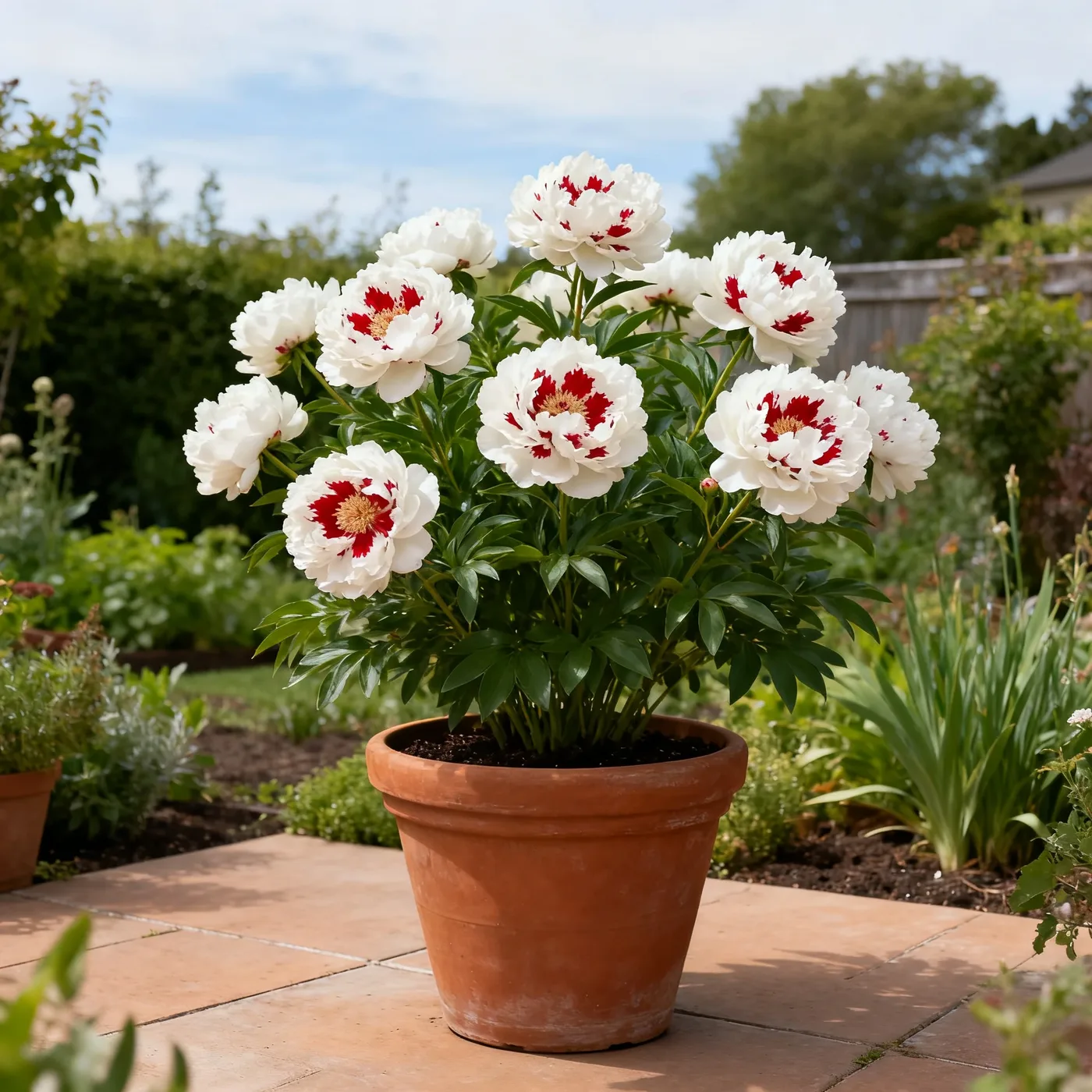
Most people expect a peony bouquet to begin with a flower already open. With this one it begins with a closed bud, because the fully double ivory bloom with its crimson flecks and strong old-rose scent opens best on the kitchen counter, not out in the border where weather batters it.
Below, you'll find out all about cutting and arranging Festiva Maxima, including how to scout the row, how to judge a bud by touch, how to clear ants, and how to condition stems so they open slowly in the vase.
Walking the Row Before Festiva Maxima Opens
Start walking the row several days before you plan to cut, because Festiva Maxima is an early peony with a short season. It typically blooms from May to June, which spans a wide range of climates, so let the buds, not the calendar, tell you when your week has arrived.
Once the buds swell, go out every morning. Warm spells compress everything, and each plant blooms for only about two weeks, so a bud that was firm one day can be loosening within days.
We still remember one morning when the dew soaked our boots, every leaf held a bead of water, and the first stem we lifted felt cool and faintly yielding at the tip. That feel is what you are scouting for, and it tells you more than any date on the calendar.
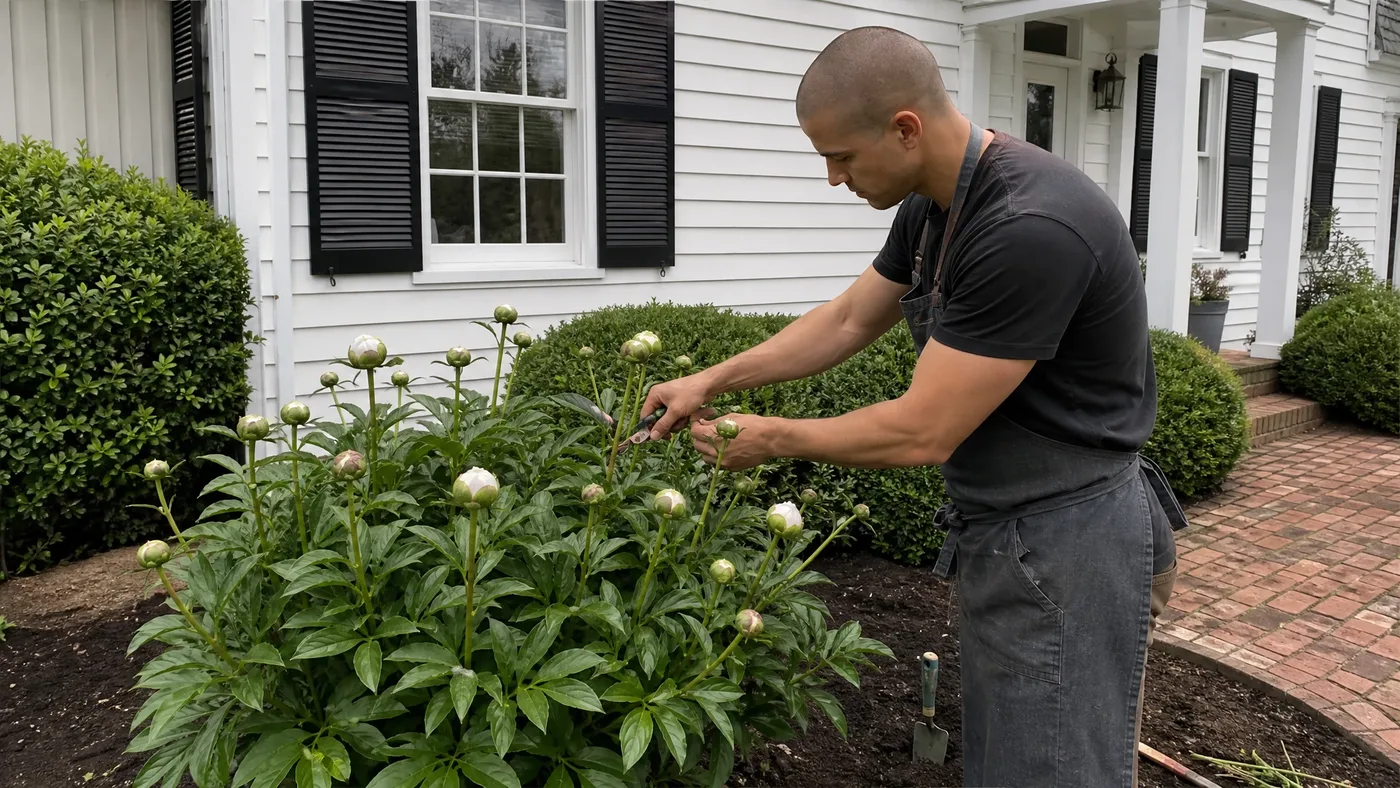
Choose your stems before you pick up the pruners. You want a swollen bud whose tight green wrapping is starting to give way to a hint of color, on a stem tall and straight enough to stand well in a vase. A loose strip of cloth tied below each chosen bud saves you from second-guessing in the half light.
If you disbud for larger flowers, those single-bud stems are the easiest to judge, and our guide to disbudding Festiva Maxima covers the timing. On a young plant, take only a stem or two and leave the rest to feed the crown.
Squeezing the Marshmallow Bud
Cup the bud in your palm and press it between forefinger and thumb, lightly. The Missouri extension describes the right stage as one where buds are soft when gently squeezed, still closed but showing some color. Everything else in this guide depends on getting that moment right.
Growers call this the marshmallow stage, and the name is exact. A hard bud, firm as a small ball, has no give and will often sulk and refuse to open once it is cut. A bud that yields slightly and springs back has finished its growing and is ready for the vase.
Festiva Maxima makes the test a little more demanding than most. The bloom is fully double, so the bud is packed with petals and heavy in the hand, and a firm squeeze bruises the outer layers. Use the pads of your fingers, never your nails, and let go the moment you feel it give.
This is how we read the stages in the row.
| What you feel | What you see | What to do |
|---|---|---|
| Hard, no give | Tight, mostly green | Leave it and check tomorrow |
| Soft like a marshmallow | Closed, with some color showing | Cut now |
| Light and airy | Petals starting to loosen | Cut at once and handle gently |
| Open and delicate | Center showing | Cut only for same-day display |
The Missouri extension reports that buds cut at this soft stage typically reach full bloom in 8 to 48 hours in water. You will hear advice to wait until the flower is nearly open so you can smell it first. We disagree for this peony: the scent is strong enough that you will not miss it, and the open flower is the one that bruises and carries ants indoors.
Making the Cut and Carrying Stems In
Cut early in the morning, while the stems are full of water and the air is cool. Extension horticulturists at K-State advise cutting before the bloom is fully opened, preferably early in the morning, and in a row of Festiva Maxima that advice pays off twice, since the heavy double heads are the first to flag in warm sun.
Where to Cut the Stem
Use sharp, clean pruners and cut at a slant, just above a leaf. Leave foliage on the plant, because those leaves feed the crown that grows next year's buds. On a young plant take just a few stems, and on an established clump never strip it bare.
The leaves you leave behind keep working until fall, when our guide to cutting back Festiva Maxima takes over from the vase.
Carrying Stems Indoors
Bring a bucket of cool water to the row and drop each stem in as soon as it is cut. Set the bucket in shade, on the shaded side of a building or under a tree, and never leave stems lying on a path or tailgate in the sun, even for a few minutes while you cut more.
Carry the bucket with the heads up and apart. The big double blooms bruise when they knock together, and a bruise on an ivory petal shows within the hour.
Shaking Out the Ants
Ants are likely to be on the buds before you are, and they ride indoors in the layers of a double flower if you let them. K-State Research and Extension says ants are not problematic for the blooms and insecticide is not warranted, so there is nothing to spray. Your only job is to keep them out of the house.
Shake Each Stem Outdoors
Work on the lawn or path, never at the back door. Following the Missouri advice, hold each stem upside down just below the flower and give it a few firm shakes outdoors. Turn the head slowly as you shake, because the many layers of a double bloom give ants more places to hide than a single flower would.
Rinse Only When Needed
If a few ants hold on, rinse the flower gently under a cool, soft stream of water and shake off the drops. Work quickly and put each stem straight back into the bucket, so the cut end is not left dry.
The visit is temporary, and a soft marshmallow bud has less to offer ants than an open bloom. That is one more reason to cut early rather than late.
Conditioning Festiva Maxima Stems in Cool Water
Take the bucket straight to the coolest room in the house, out of sun and away from drafts. Conditioning is simple, but it decides whether the thick stems of Festiva Maxima drink well or sit and sulk, so follow the steps in order.
- Strip every leaf that would sit below the waterline, and a few more if the stem is leafy, so nothing rots in the water.
- Recut each stem with a sharp, clean blade at a slant, and put it back in water right away.
- Stand the stems in a deep container of cool water that reaches well up the stem.
- Rest them somewhere cool and shady for several hours before you arrange anything.
- Check the buds as they rest, and move any that start to loosen to the front of the line for the vase.
The cool water matters more than it seems. Since the Missouri extension puts full bloom at 8 to 48 hours after cutting, the temperature of the room moves you around inside that window, with a cool room slowing the buds and a warm one hurrying them.
If you want blooms open for a gathering, bring the buds into warmth a day ahead. If you want to hold them back, keep them in the cool room and wait.
Festiva Maxima Blooms Settle Into the Vase
We cover how to arrange the cut stems in the vase first, including the kind of vase to choose, how to set the stems, and where to stand it. After that we follow the vase days, from tight bud to full, fragrant bloom, with tips for keeping the show going as long as you can.
Arranging Heavy Double Heads
Choose a heavy vase with a mouth wide enough to hold the heads apart, and set the stems at different heights so each bloom has room to expand. An open Festiva Maxima is large and full, so a few stems look better than a crowded handful. Keep the vase out of direct sun and away from heaters.
Stand the vase on a table where you will pass it, not in a far corner. The scent is half the point of this cultivar, and it is strong enough to fill a room.
What the Vase Days Look Like
On the first day the buds sit tight and round, then soften and loosen over the 8 to 48 hours the Missouri extension describes. The petals unfold into the full ivory-white double, and the crimson flecks at the center show as the heart opens. The old-rose fragrance builds as it does.
Change the water every day or two and recut the stems each time. After the peak the petals loosen and begin to drop, so do not wait for the last petal to go before enjoying them.
We will not promise a number of days, because the sources give no firm count and it depends on how soft the bud was and how warm the room is. Cooler rooms and fresh water give the longest show.
Our bloom time and flower color guide shows what the petals do over their season, and our comparison of Festiva Maxima and Sarah Bernhardt explains why this one arrives first and why that matters for a bouquet.
A Festiva Maxima Bouquet Worth the Morning
The whole job comes down to one early walk. Scout the row for swollen buds, squeeze gently for the marshmallow give, cut in the cool of the morning with the leaves left behind, shake out the ants, and let the stems drink in a cool room. Do that and a closed bud becomes an armful of heavy ivory blooms with crimson at their hearts.
A day or two later you will come into the kitchen and find the whole room filled with the scent of old roses, and you will remember why you waited so many years for those first flowers.
Festiva Maxima
Nursery-grown Festiva Maxima in sizes from 4 Quart, shipped to your door.
From $38.99
Shop Now →Festiva Maxima does its growing in our open beds, where it gets at least six hours of direct sun and watches its crowns die back each fall before the new shoots return. We raise and sell top-quality plants from our own farms, so the bouquet you just learned to cut can come from a peony we tended ourselves. When you want armfuls of your own, start with one of ours.