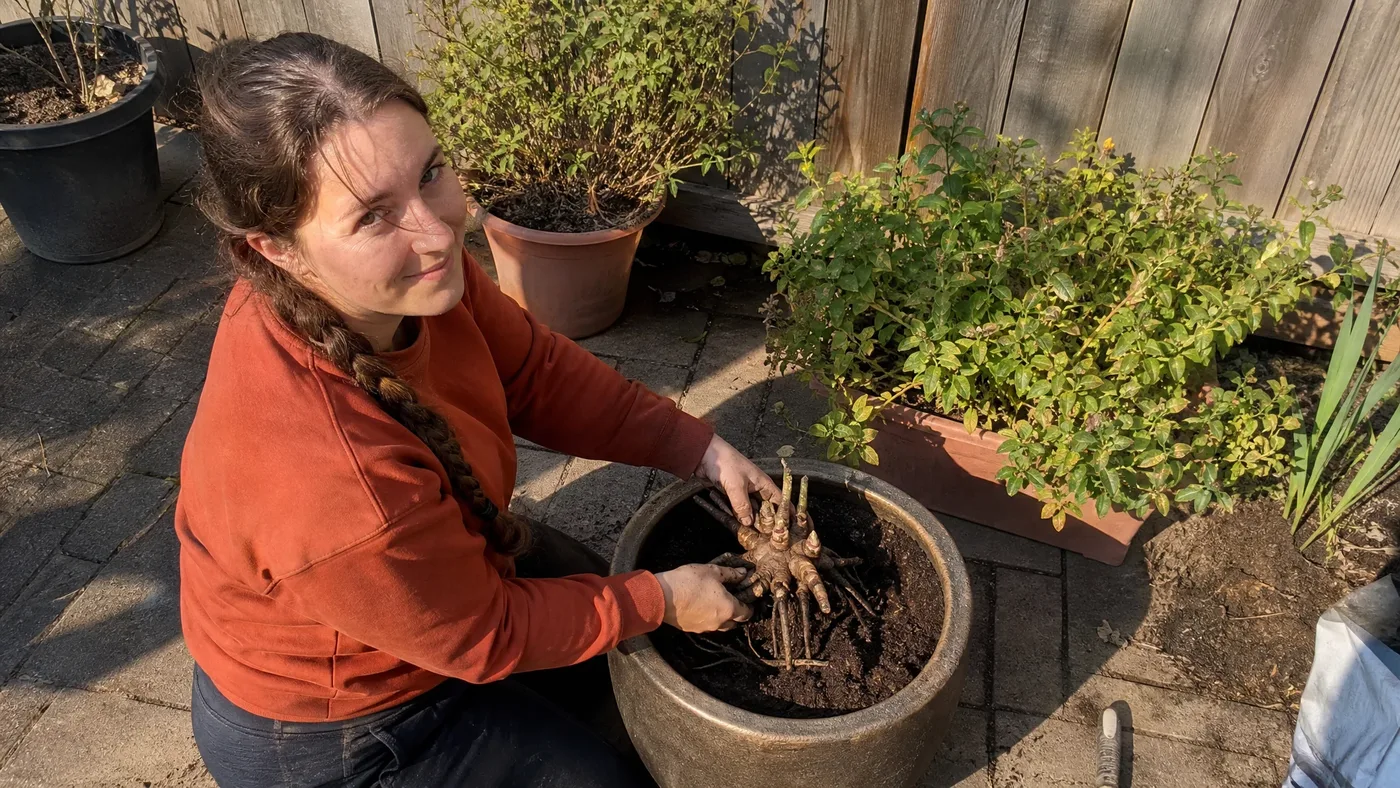
Is Festiva Maxima Peony a Bulb or a Root?
Picture a receiving dock on a spring morning. A box comes in marked "peony bulbs," and whoever opens it finds no bulb at all, only a handful of pale, fleshy roots with a few knobs on top. Nothing is wrong with the shipment. The label used the wrong word, and that one word sits behind a lot of failed first seasons.
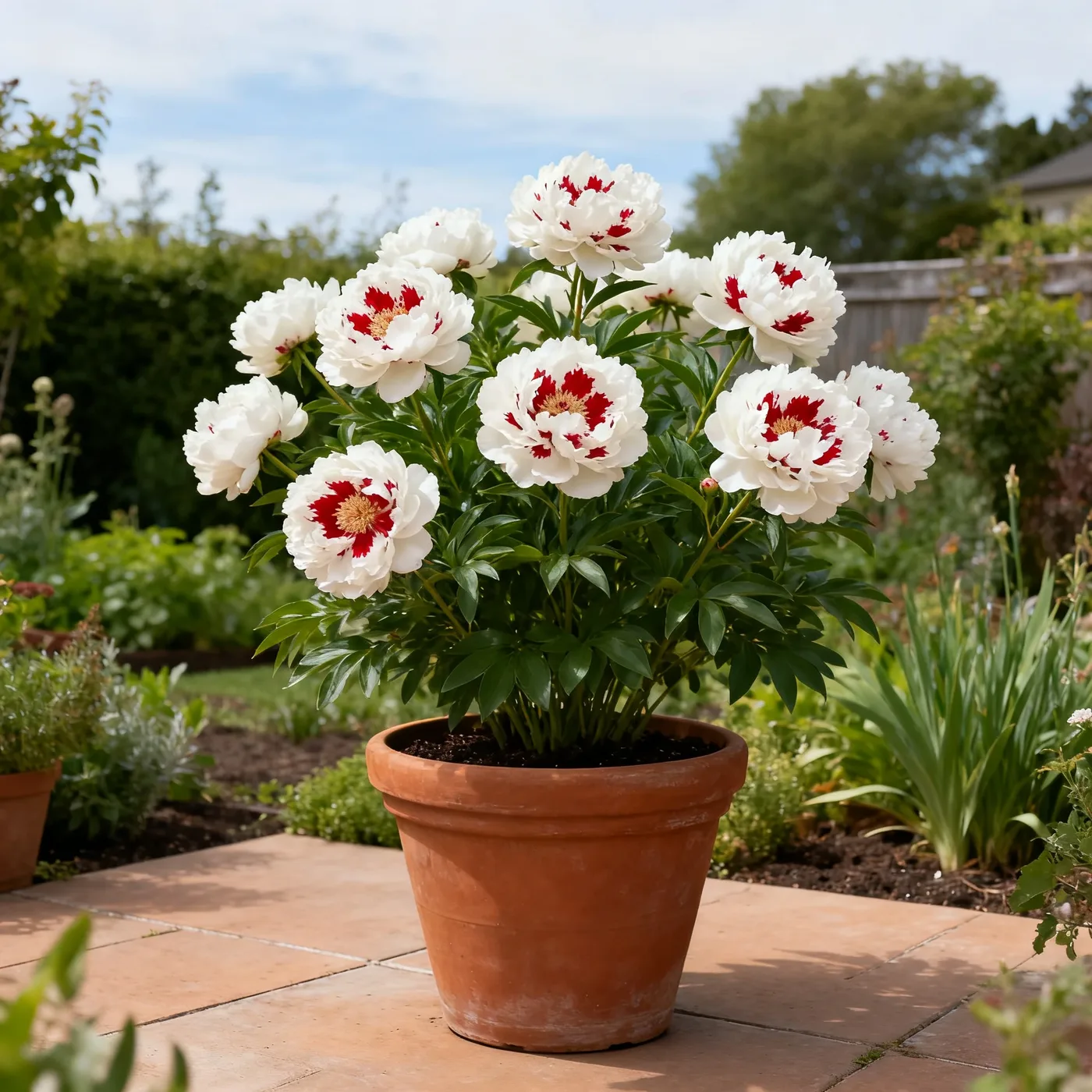
Festiva Maxima is sold as a bare-root division. How you picture it decides how deep it goes into the soil, and a plant treated like a tulip bulb ends up buried too deep to flower.
This guide covers everything you need to know about bulbs versus roots for this peony, from where it sits in the garden to how to count the eyes on the crown before it goes into the ground.
Where Festiva Maxima Peony Sits in the Garden Picture
Start with the whole bed. Festiva Maxima is an herbaceous perennial, so it dies back to the ground every fall and returns from the same spot every spring. It is not an annual you replace, and it is not a bulb you slip between other plants. It builds one steady clump, 2-3 feet tall and wide and listed for zones 4 to 8, and it stays put for decades.
That permanence is where the bulb idea comes from. Most of us learned spring planting from tulips, daffodils and crocuses, so a plant that vanishes in winter and returns in spring gets filed in the same drawer. The phrase "festiva maxima peony bulbs" turns up in searches, and each one comes from someone about to place an order. The wrong word at that moment shapes how they plant.
Planning the Space Around a Clump
Because the clump stays, give it room from the start. A mature plant fills a patch about 2 to 3 feet across, so neighbors belong outside that circle. Our landscape ideas guide covers pairings. The principle is simple: put it where you want it for the long haul, because this is a plant you set once.
A bulb bed looks empty by midsummer. A peony does not. The flowers come in May to June, and each plant blooms for about two weeks, but the foliage holds the spot as a rounded green mound until fall. That short show on a plant that works all year is why we call it a long project, and a cut-flower patch you will love for years.
One of the most common questions we get is whether the peony goes in with the spring bulbs. It does not, and the next sections show why.
The Festiva Maxima Plant Above Ground and Below
Look at the plant as one organism with two lives. Above ground, stems and leaves rise from the crown each spring, carry the flowers in late spring, then stay as a leafy mound through summer. Below ground, a crown and thick roots sit still and hold the plant together. What you see in a bed is half of it, and in winter you see none of it.
The Yearly Cycle Above Ground
Shoots emerge in spring, the plant fills out to its 2 to 3 foot size, and the flowers open in May to June. After that the leaves keep working all summer. In fall the stems die back and the bed looks bare. That bareness is normal, and it is the moment people mistake for loss, or for the rest period of a bulb.
What we tell customers is to leave the foliage alone until it has died back on its own, then cut it down. The summer leaves are the plant's working season, and an early haircut gains you nothing.
What Persists Underground
When the top dies, the plant does not. The crown stays in the soil with next year's eyes already formed on top of it, and thick storage roots hang beneath. Those eyes sit close to the surface, which is exactly why planting depth is so unforgiving for this plant.
A bulb is a plant folded up in one package and replaced or renewed each season. A Festiva Maxima crown is a permanent framework that thickens and spreads a little each year, adding eyes as it grows. That slow build is the reason the first bloom takes patience. Our guide on how many years until Festiva Maxima peonies bloom sets out what to expect, and the wait is worth it.
Why the Shipped Root Is Not a Bulb
A true bulb is a compact package of fleshy scales wrapped around a small base plate, with the whole young plant folded inside. Plant it and it grows up from the center. Festiva Maxima has nothing like that. Herbaceous peonies have fleshy, thick tuberous main roots with a head-like crown on top and thin fibrous roots below, and that is what arrives in your box.
The table lays out the differences that matter when you pick up a trowel.
| Point | True bulb | Festiva Maxima division |
|---|---|---|
| What you hold | A scaly, onion-like package | A crown with thick, fleshy roots hanging below |
| Where reserves are stored | In the fleshy scales | In the thick storage roots |
| Where growth starts | From the center of the bulb | From the eyes on top of the crown |
| How it is planted | Pointed end up, depth set by bulb size | Eyes up, covered by only 1 to 2 inches of soil |
| Result of planting too deep | Slow emergence | Foliage but few or no flowers |
Why the Difference Changes How You Handle It
Treat the division like a bulb and you will dig a deep hole, drop it in and fill it. That is the mistake behind most disappointing first years. A deeply planted peony may have beautiful foliage but few if any flowers, so the plant looks healthy and still gives you nothing to cut.
The crown also needs gentler handling than a bulb does. Do not snap off roots to make them fit a hole, and do not toss the division around like a loose tuber. Dig the hole to suit the roots, and the eyes can stay where they belong, near the surface. Our guide to a peony that will not bloom walks through the other causes.
Reading a Festiva Maxima Root Division on Arrival
When the box opens, expect a bare-root division: no pot, no leaves, just a crown with thick fleshy roots and thinner fibrous ones. It will look dormant, because it is. The divisions we ship are bare-root with the crown and eyes attached, which is how this plant is meant to travel, and our buying guide explains what to look for from any seller.
We often see customers worry that the roots look bare and lifeless. A dormant division is supposed to look that way. What you are checking is firmness and structure, not leaves.
The Arrival Checklist
Work through these steps in order on the day the box arrives, before the roots have time to dry out in a warm room.
- Open the box and lift the division out gently, holding it by the crown rather than by a single root.
- Find the crown, the head-like knob at the top, and look for the small pink or white eyes on it.
- Press a few of the thick roots. They should feel firm and plump, not mushy and not shriveled to a thread.
- Count the eyes and note the number, since it tells you how soon to expect flowers.
- Check for mold or a sour smell. A little loose packing material clinging to the roots is normal, but soft rot is not.
- Plant promptly, or keep the division somewhere cool and out of sun and wind until you can.
What Not to Worry About
A few broken fibrous roots are fine. The thick storage roots and the eyes are what carry the plant. If a root is cracked or a root tip is missing, that is nothing to fret over.
If anything looks wrong, photograph it before you plant and contact the seller right away. Do not let a bare root sit in an open box for days while you decide, because a good division left to dry out is a good division wasted.
Counting Eyes on the Festiva Maxima Crown
This is the closest look you will take at the plant. The eyes are the shoot buds on top of the crown, and Penn State Extension describes them as white or pink-colored. Each one becomes a stem, so the eyes are the plant's future, and the roots are the supply line feeding them.
How Many Eyes to Expect
Herbaceous peonies are sold bare-root with an attached crown and at least three to five buds, and that matches our 3-5 eye divisions. The count matters because divisions with three to five eyes reach maturity sooner than smaller divisions. A division with only one or two eyes can take years longer to flower.
Eyes can be hard to spot on a division that is dry or dirty. Look at the crown in good light and brush off loose material. If you count fewer than three, do not discard it. It will grow, just on a slower schedule.
Which Way the Eyes Face
Eyes go up. The crown with the eyes sits on top, and the fleshy roots hang down from it. If you cannot tell which end is which, find the eyes and plant that side toward the sky. Do not lay the division on its side to save digging, since the shoots will have to turn upward on their own.
The depth rule is where this connects to everything above. Place the division in the hole and follow our planting guide so the top eyes sit under only 1 to 2 inches of soil. A stick or shovel handle laid across the hole makes a good depth gauge. Check again after the first watering, because soil settles.
Plant a bulb deep and it does well. Plant this root deep and the eyes struggle to emerge, which is why the bulb label does so much harm.
Ordering Festiva Maxima Roots, Not Bulbs, Correctly
Search for roots, divisions or bare-root plants, not bulbs. A listing should tell you it is a division with eyes, and 3-5 eyes is the number to look for. Expect fleshy roots and a crown on arrival, nothing in a pot and nothing with leaves, and expect your first big flower display to take patience. The mix-up over the word "bulb" settles the same way each time: this is a root with eyes, and it goes in shallow.
Look for roots, count the eyes, plant them facing up.
Festiva Maxima
Nursery-grown Festiva Maxima in sizes from 4 Quart, shipped to your door.
From $38.99
Shop Now →Our Festiva Maxima divisions come out of beds in full sun and deep, well-drained soil, so what we dig has already lived the way it will in your yard. Since we are a small team of growers on our own farms, offering top-quality plants, we would be glad if you chose to pick out a plant for your garden and put the root-with-eyes question to rest.