Is Festiva Maxima Peony a Tree, Itoh, or Herbaceous Peony?
A customer at our packing table picks up a bare Festiva Maxima root, turns it over twice, and asks where the woody trunk is going to be. There isn't one, and there never will be. Customers usually ask us some version of this every fall, because a flower this large on a plant introduced in 1851 seems like it ought to belong to a shrub.
The mix-up matters because the wrong belief leads to the wrong job. People leave dead stems standing all winter, hunt for buds on brown sticks, or prune it like a bush and wonder why nothing improves. Read on for the beliefs people carry into the yard, taken one at a time: the trunk, the Itoh question, the disappearing act in winter, tree peony rules, the heirloom fussiness idea, and what the 1851 lineage really means.
The Belief That Festiva Maxima Grows a Woody Trunk
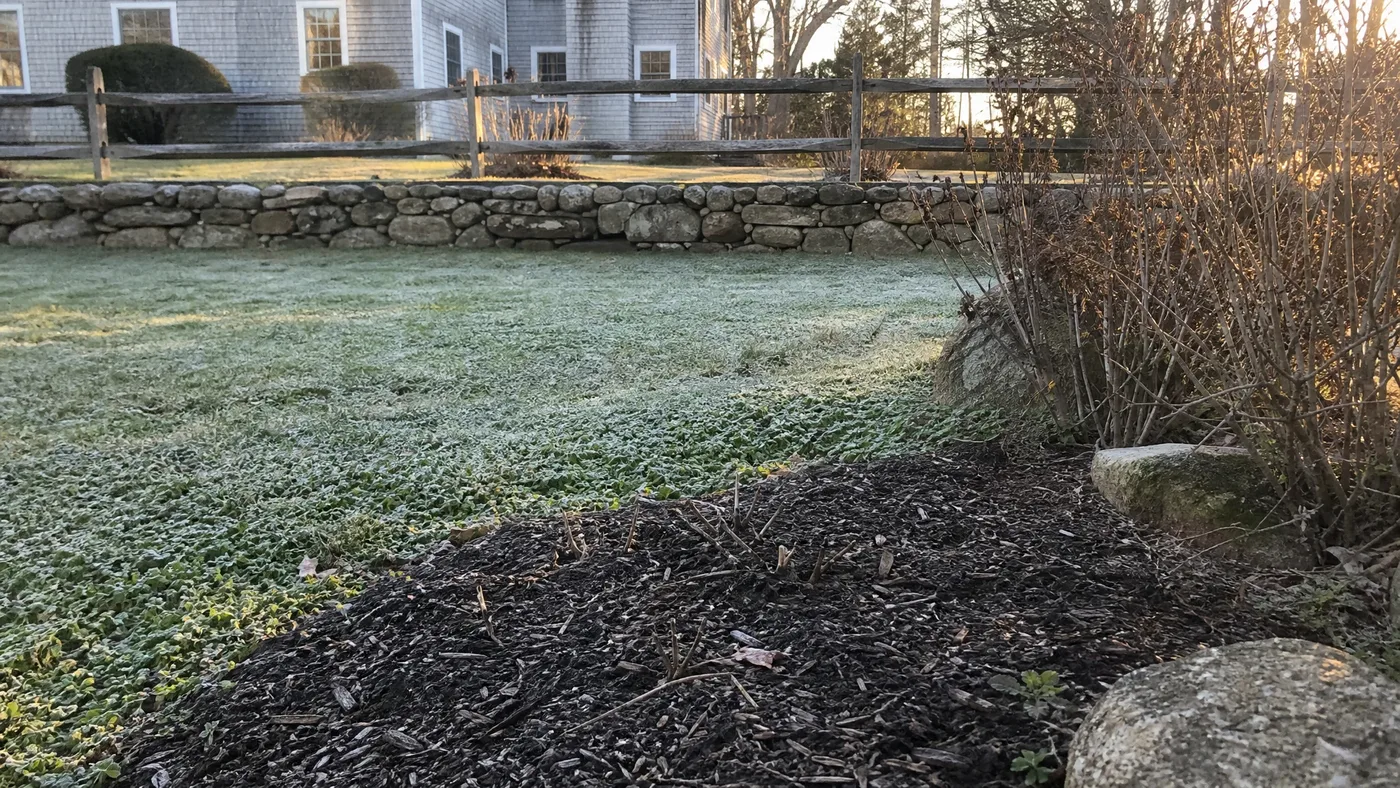
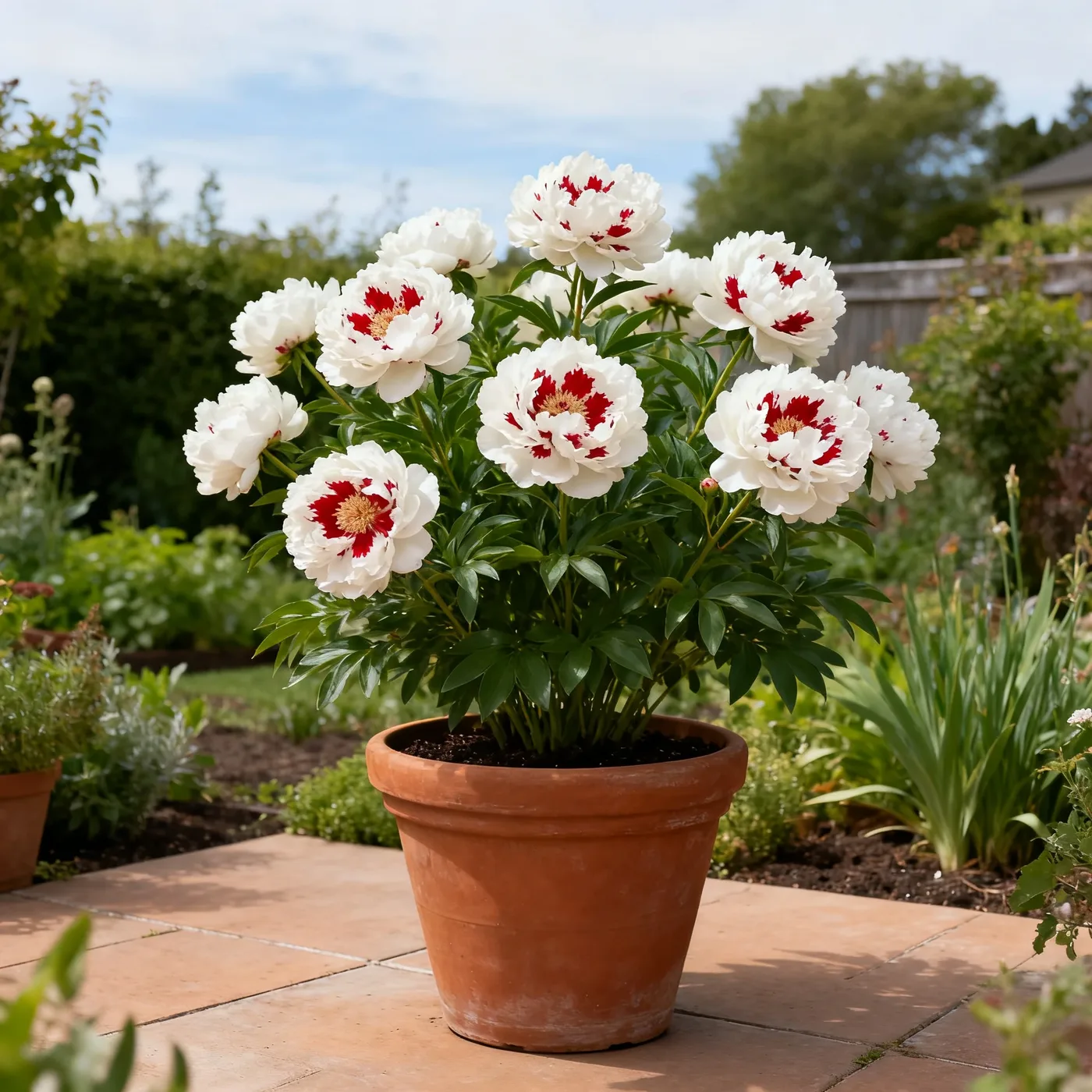
Nothing of Festiva Maxima above ground lives through a winter. Each spring, soft, fleshy shoots push up from buds on the crown, leaf out, carry the flowers, and by fall they are spent stems. What you get is a mounded clump that stands 2–3 feet tall and wide, rebuilt from the ground every year. A stem that never survives a winter never gets the chance to turn into wood.
The name settles the classification. Paeonia lactiflora is the species, and Festiva Maxima is a cultivar of it, which is why the botanical name is written Paeonia lactiflora 'Festiva Maxima' with the cultivar in quotes. It is listed under exactly that name. You will also see Paeonia x lactiflora 'Festiva Maxima' in catalogs. Same plant, different punctuation, and the answer to either search is the same: an herbaceous peony, not a shrub.
So what does thicken over the years? The crown and the fleshy roots underground, which is the part you are holding when you buy a bare root with a few buds on it. That pile of buds is the entire plant in its resting form. In our rows, an old clump is a wider clump, never a taller one with a trunk, and the flowering stems always come fresh from the soil line. Look for a trunk and you will be looking for a long time.
Is Festiva Maxima Secretly an Itoh?
No, and the easiest way to see why is parentage. Itoh peonies, also called intersectional peonies, are hybrids between a tree peony and an herbaceous peony. Breeders made them in the modern era, long after Festiva Maxima was introduced in 1851. Festiva Maxima has no tree peony in its background at all. It comes straight from the lactiflora species, so there is nothing "secret" to uncover.
Leaf shape gives it away too. Itoh foliage tends to be deeply cut and a little more like a tree peony's, while Festiva Maxima carries the broader, glossy leaflets you expect on a classic lactiflora border peony. If you are standing in front of a plant and cannot tell, read the tag name. Festiva Maxima as a name is only ever a lactiflora.
The confusion has a fair cause. Herbaceous and intersectional peonies are both large herbaceous perennials with bowl-shaped flowers, so the two groups do look and behave alike above ground. The table below sorts the three types by what you can actually see and do.
| Type | Winter stems | Fall pruning |
|---|---|---|
| Tree peony | Woody stems stay standing, a true shrub | Minimal pruning only |
| Itoh (intersectional) | Dies back, grouped with herbaceous perennials | Handled like the herbaceous group |
| Festiva Maxima | Dies to the ground every year | Cut back near ground level |
Our advice: if you want Festiva Maxima, buy Festiva Maxima. An Itoh will not give you the same flower, and this one does not need to borrow anything from a tree peony.
Why Your Festiva Maxima Vanishes Each Winter
Bare ground in January is the plant doing its job. After a hard freeze the foliage collapses, and the energy the leaves gathered all summer is already stored in the roots and in the buds sitting at the top of the crown. Those buds sit through the cold, and they need that cold season to wake up properly in spring. Nothing is dead. The plant has simply moved everything underground where winter cannot reach it.
Cut the Stems After the Freeze
The Iowa State extension says to cut back peony foliage after a hard freeze has destroyed it, which in Iowa falls in late October or early November. Your date will differ, so go by the weather rather than the calendar. Cut the stems near ground level and clear the debris from the bed. Our full walkthrough is in pruning and cutting back Festiva Maxima.
Before You Decide It Died
The real worry comes in spring, when a newly planted root sits quiet while the neighbors leaf out. Run through these checks before you start digging.
- Mark the spot with a stake in fall so you remember where the crown sits once the stems are gone.
- Wait until the soil has properly warmed, because peonies are among the later plants to show growth.
- Look at the soil surface for pointed buds pushing up, and leave the crown alone while you do.
- If a new plant comes up but never flowers, count the years first, since a young root builds itself before it blooms. See how many years until Festiva Maxima blooms.
Winter bareness is never the problem. Rot from soggy soil is, and that is a drainage issue, not a dormancy one.
Do Tree Peony Rules Apply to Festiva Maxima?
Gardeners who read about tree peonies and then buy Festiva Maxima often carry the advice across, and most of it breaks on the way. Tree peonies are shrubs rather than trees, with stems that persist for years. Every rule written for them assumes a woody frame you want to keep. Festiva Maxima has no frame to keep, so the rules do not apply.
The pruning rule is the clearest example. Tree peonies need minimal pruning, and the usual advice is to cut old, leggy stems back by about a third after leaf-fall to encourage bushiness. Do that to Festiva Maxima and you will leave a forest of dead stalks that hold fungal spores over winter. Our approach is the opposite: the whole plant comes down every year.
Here is how the advice sorts out in practice:
- Do not leave stems standing for structure. Cut Festiva Maxima back near ground level after the foliage is killed by frost.
- Do not treat last year's stems as next year's flower wood. Festiva Maxima blooms on fresh spring growth, so nothing carried over is needed.
- Do not borrow tree peony planting instructions. Festiva Maxima's buds should sit near the soil surface, and a buried crown is a leading reason for no flowers. Our planting guide for Festiva Maxima covers this in detail.
The one thing that does carry over is sun. Both like open light, and Festiva Maxima is listed for full sun at six or more hours a day.
The Idea That Festiva Maxima Is Fussy Because It Is Old
We hear that an heirloom must need coddling, as if age made a plant delicate. The record says the opposite. Festiva Maxima has been grown since 1851, and gardens have kept it going that long because it survives neglect, bad winters and the occasional wrong decision. Plants that were fussy would have been lost from the trade long ago.
Cold Hardiness
The species is hardy in a broad range. Herbaceous peonies do best in zones 5–7 but can grow in zones 3–8, and the cultivar grows in zones 4 to 8. That is a slightly narrower range than the species, so if you garden in zone 3, check with your local extension service before you commit. For more on range, see Festiva Maxima hardiness zones.
Soil, Light and Deer
Festiva Maxima is listed for acid, alkaline or neutral soil and for full sun or partial shade. The shade comes with a catch: overly shaded sites can inhibit flowering. Deer tolerance is also on its side, since the species is shunned by deer and the cultivar is listed as deer tolerant.
What we tell customers is to plant it correctly once and then mostly leave it alone. Feeding it constantly or fussing with the crown does more damage than good.
What the 1851 Parentage Actually Tells You
Paeonia lactiflora lineage reads like a care sheet once you know how to interpret it. It tells you the plant is herbaceous, so it dies back, needs a full cutback, and regrows from buds at the crown. It tells you the flowers come on new spring growth, in May and June, and that each plant blooms for about two weeks in late spring to early summer. It also tells you the plant is slow to settle, because lactiflora roots take their time before they flower well.
It does not tell you the plant is delicate, woody, or hybrid-bred for a longer season. It is a species-line peony, long established and predictable. Give it sun, drainage and a patient first few years, then cut it down each fall.
The verdict in plain terms: Festiva Maxima is a lactiflora herbaceous peony, and every part of its care follows from that one fact.
Festiva Maxima Is the Herbaceous One
If a customer asks us which kind of peony Festiva Maxima is, the answer is always the same. It is not a tree peony, it is not an Itoh, and it will never grow a trunk. The stems rise in spring, flower in late spring, and fall to the ground after frost, and the plant lives on in the roots for decades.
So give it full sun, cut it back after the hard freeze, and be patient while the first blooms arrive. If it dies to the ground and comes back in spring, it is the herbaceous one, so cut it back and stop looking for a trunk.
Festiva Maxima
Nursery-grown Festiva Maxima in sizes from 4 Quart, shipped to your door.
From $38.99
Shop Now →Festiva Maxima is a herbaceous lactiflora, and on our farms it gets the open, sunny ground that suits a plant dying back each winter and returning in spring. Everything we ship was raised in our own beds, with firm roots and sound buds checked before it goes out. When you are ready to plant yours, see what we have growing.